Elopement Planner vs. Elopement Photographer: What’s the difference (and which do you actually need)?
If you’ve started planning an elopement, you’ve probably run into something confusing:
Some photographers help plan your day, and some planners don’t take photos at all. So, what’s the difference? And which one do you actually need?
This is one of the most common questions we hear from couples planning an intentional, outdoor elopement. And the answer can have a huge impact on how your day feels.
In this guide, we’ll break down:
What an elopement photographer does (beyond photos)
What an elopement planner actually handles
The biggest differences in their roles
How to choose the right fit for your experience
So you can move forward with clarity and build a day that feels effortless, not overwhelming.
Quick Summary: Planner vs. Photographer
If you’re short on time, here’s the core difference:
Elopement Photographer: Captures your day + offers limited planning (mostly location & timeline guidance)
Elopement Planner: Designs, manages, and executes your entire experience from start to finish
Both are valuable, but they serve very different roles.
Table of Contents Show
What is an Elopement Photographer?
An elopement photographer is a photographer first and foremost.
Their primary role is to capture your day beautifully. The landscapes, the emotions, the in-between moments you’ll want to remember and cherish.
What they typically help with:
Location suggestions (based on lighting and scenery)
Timeline guidance for the best photo conditions
Basic planning advice for the flow of the day
Why they offer planning help
This support evolved naturally as elopements became more experience-focused. Couples needed help finding scenic ceremony locations, less crowded areas, and best times of day for lighting.
So photographers stepped in to guide those decisions—but always through a photo-first lens.Their priority is making sure your day looks incredible.
What is an Elopement Planner?
An elopement planner is a planner through and through.
Their role is to design, organize, and manage your entire experience, so you don’t have to carry the mental load of planning.
What they typically handle:
Vendor research, communication, and booking
Permits and logistics
Timeline creation (full-day experience, not just photos)
Design details and setup
Full day-of coordination
Their priority is making sure your day feels effortless and aligned with your vision.

The key difference
At the core, it comes down to this:
A Photographer captures the experience.
A Planner creates and manages the experience.
Both are essential—but they’re not interchangeable.
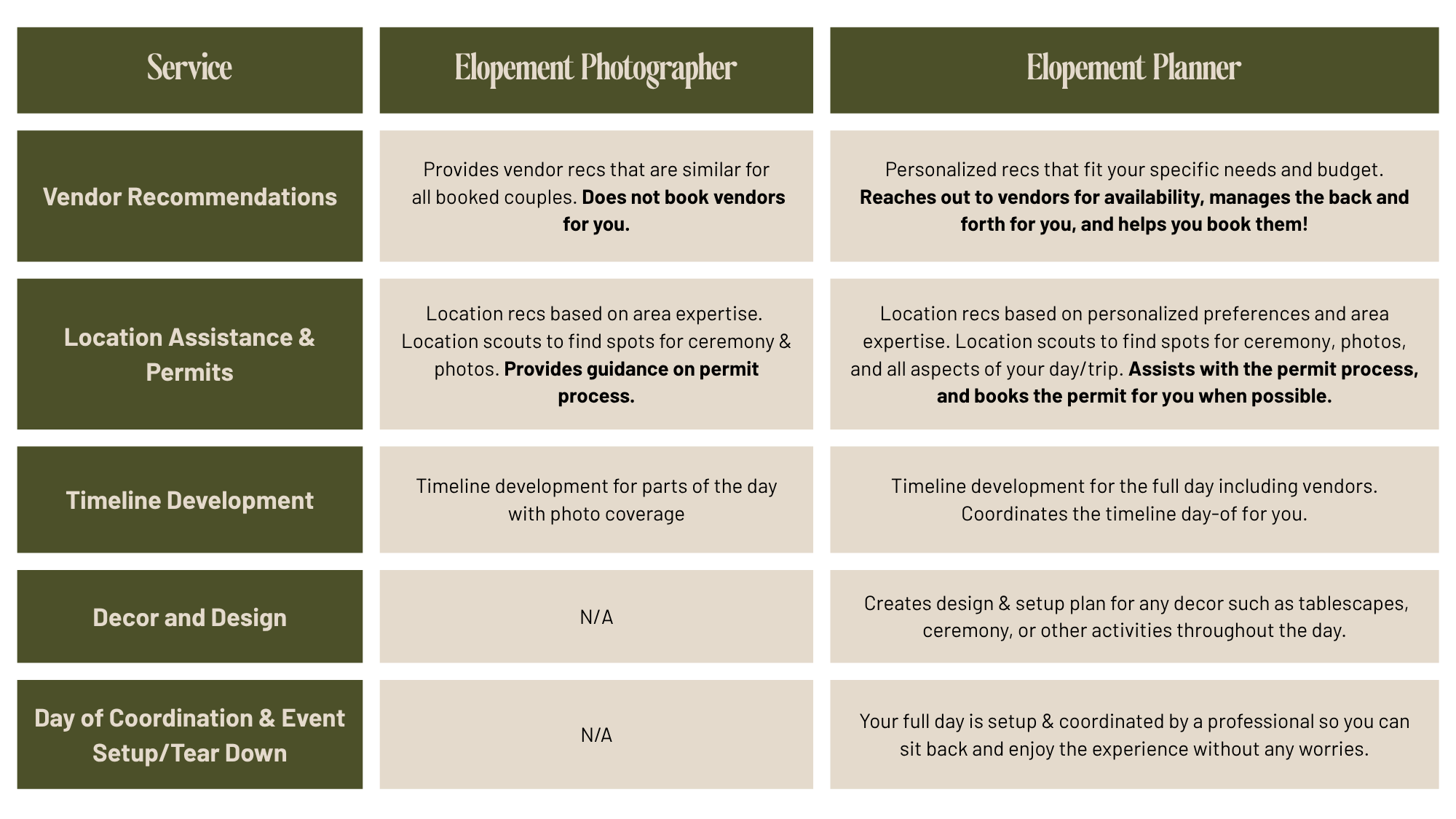
What services do they offer?
Here’s a clearer, visual breakdown of how their roles differ:
The big differences that matter
1. VENDOR BOOKING & MANAGEMENT
With a planner, you’re not spending hours:
Researching vendors
Sending emails
Comparing pricing
Coordinating schedules
They handle all of that for you—while still giving you final say. Without one, that responsibility falls entirely on you.
2. DAY OF COORDINATION
This is where the experience really changes.
An elopement planner is behind the scenes making sure everything runs smoothly day-of while you stay fully present.
What that actually looks like:
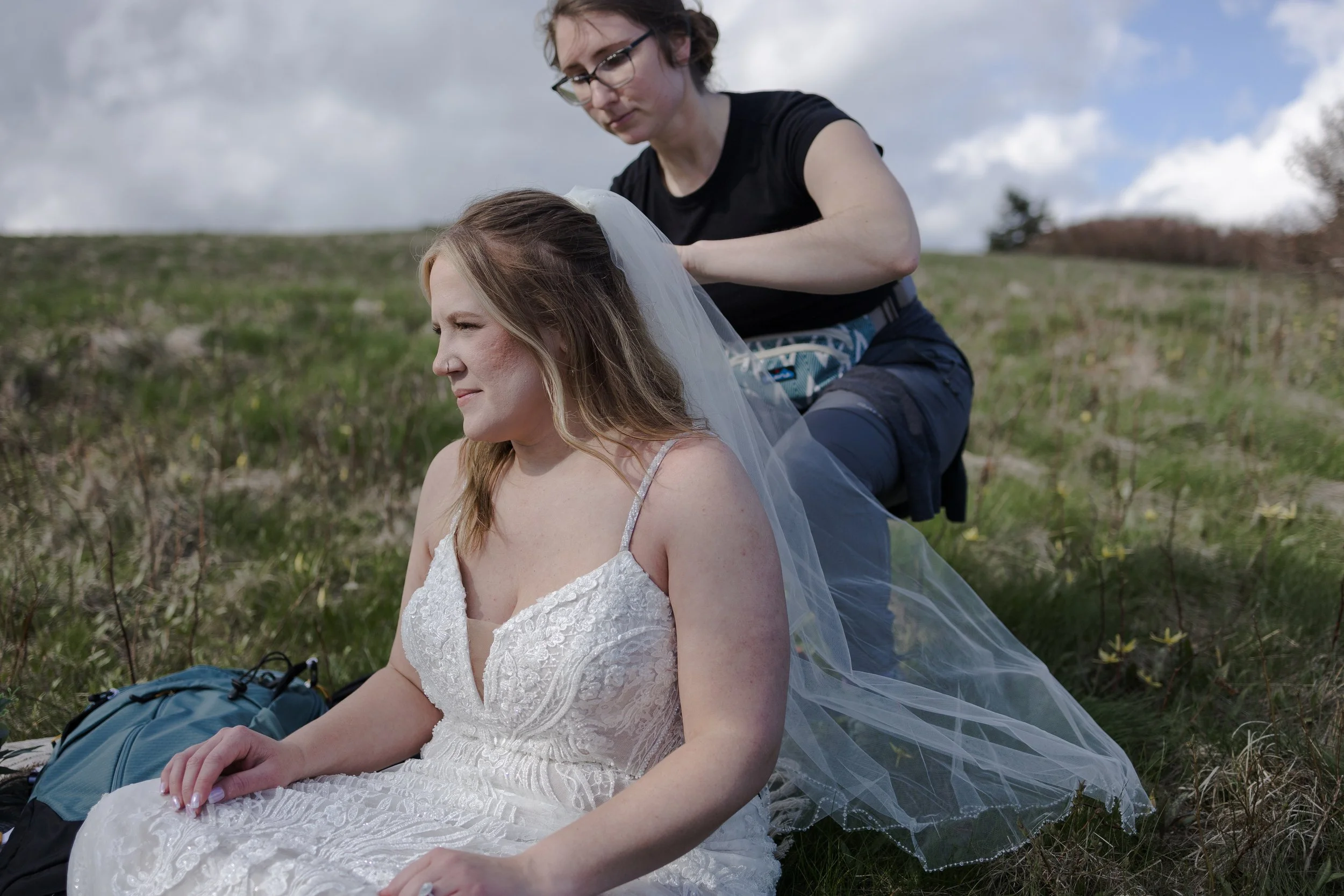
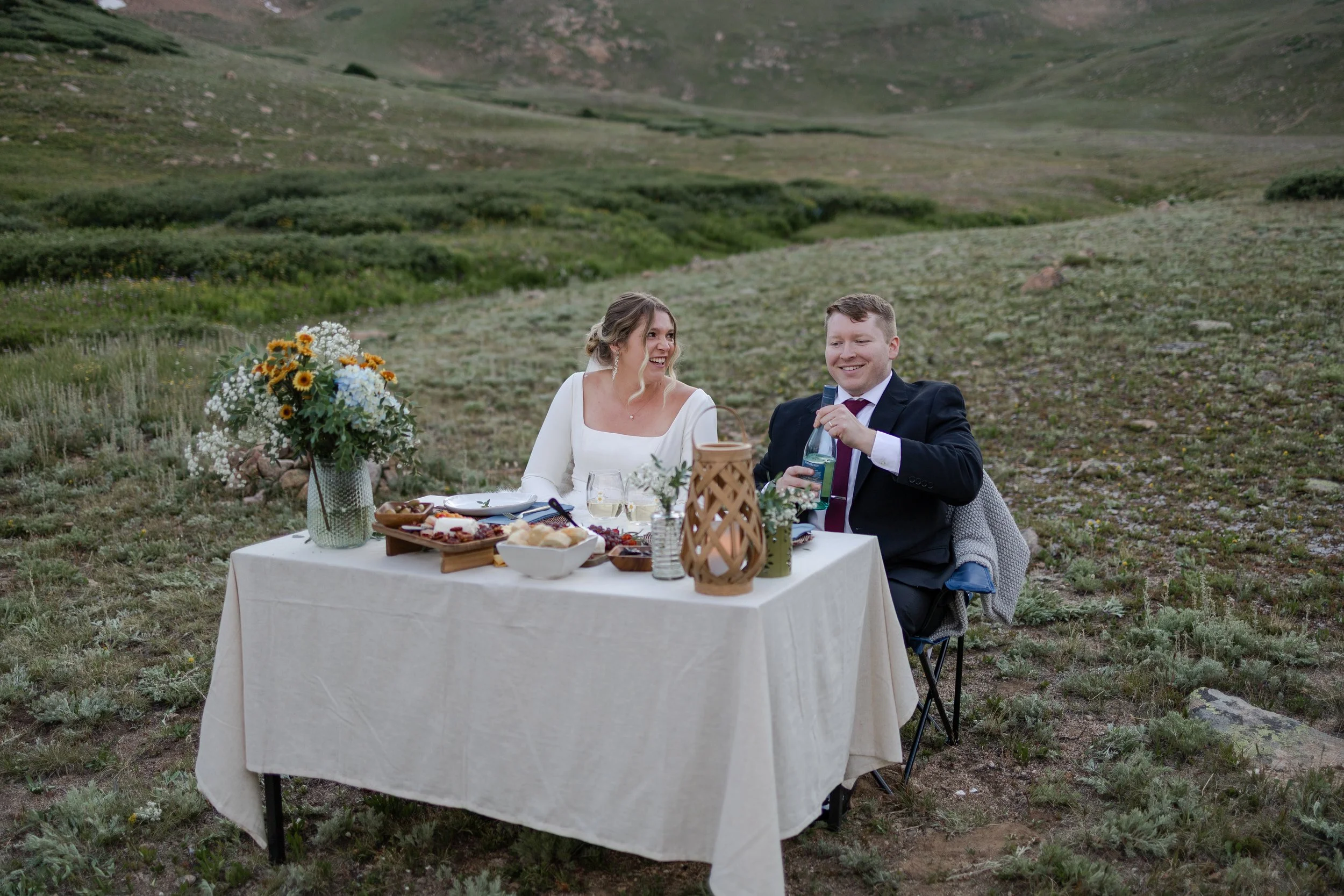
While you’re having your first look → your ceremony space is being set up
During your vows → your next activity is being prepped
As the day winds down → everything is cleaned up and organized
Meanwhile, your photographer is doing exactly what they should be doing, capturing it all, not managing it.
3. SCOPE OF SUPPORT
Some photographers offer more planning than others—but it’s important to understand that even the most hands-on photographers are not full-service planners.
Their support typically centers around locations, lighting, and photo-focused timelines and not managing vendors, handling setup, and running the day.
Cost differences to consider
While pricing varies, here’s is what you can typically expect to see with cost differences:
Elopement Photographer: Often includes light planning in their package
Elopement Planner: Separate investment for full-service support
Combined services (team-based): Higher investment, but significantly less stress
For many couples, the decision comes down to whether they want to invest more time into the planning, or invest in more support to enjoy the day?
Which option is right for you?
An elopement photographer might be the best fit if you:
Love being organized and hands-on
Enjoy researching vendors and details
Want full control over every aspect
Don’t mind managing setup or logistics on the day
An elopement planner might be the better fit if you:
Feel overwhelmed by logistics or decision-making
Don’t want to spend months planning
Want your day to feel relaxed and fully present
Don’t want to manage anything on the actual day
We want you to remember that neither option is better—they simply create very different experiences.
How we do it at Trail Magic
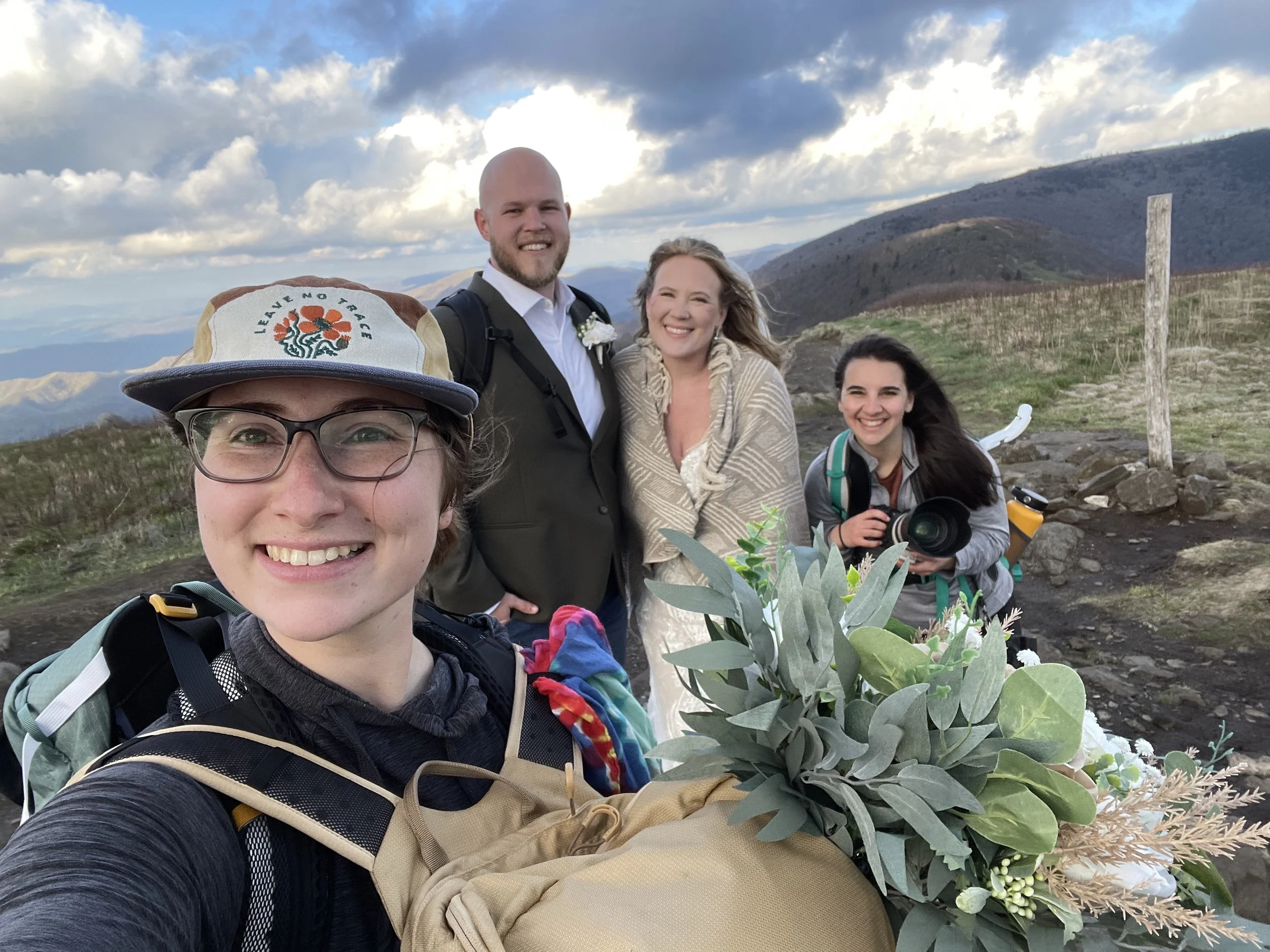
We’ve seen firsthand how valuable both roles are—and how challenging it can be to find and coordinate multiple vendors. So we built a different approach.
Instead of choosing between a planner or a photographer, we offer both, working together as a team.
WHEN YOU WORK WITH US, YOU GET:

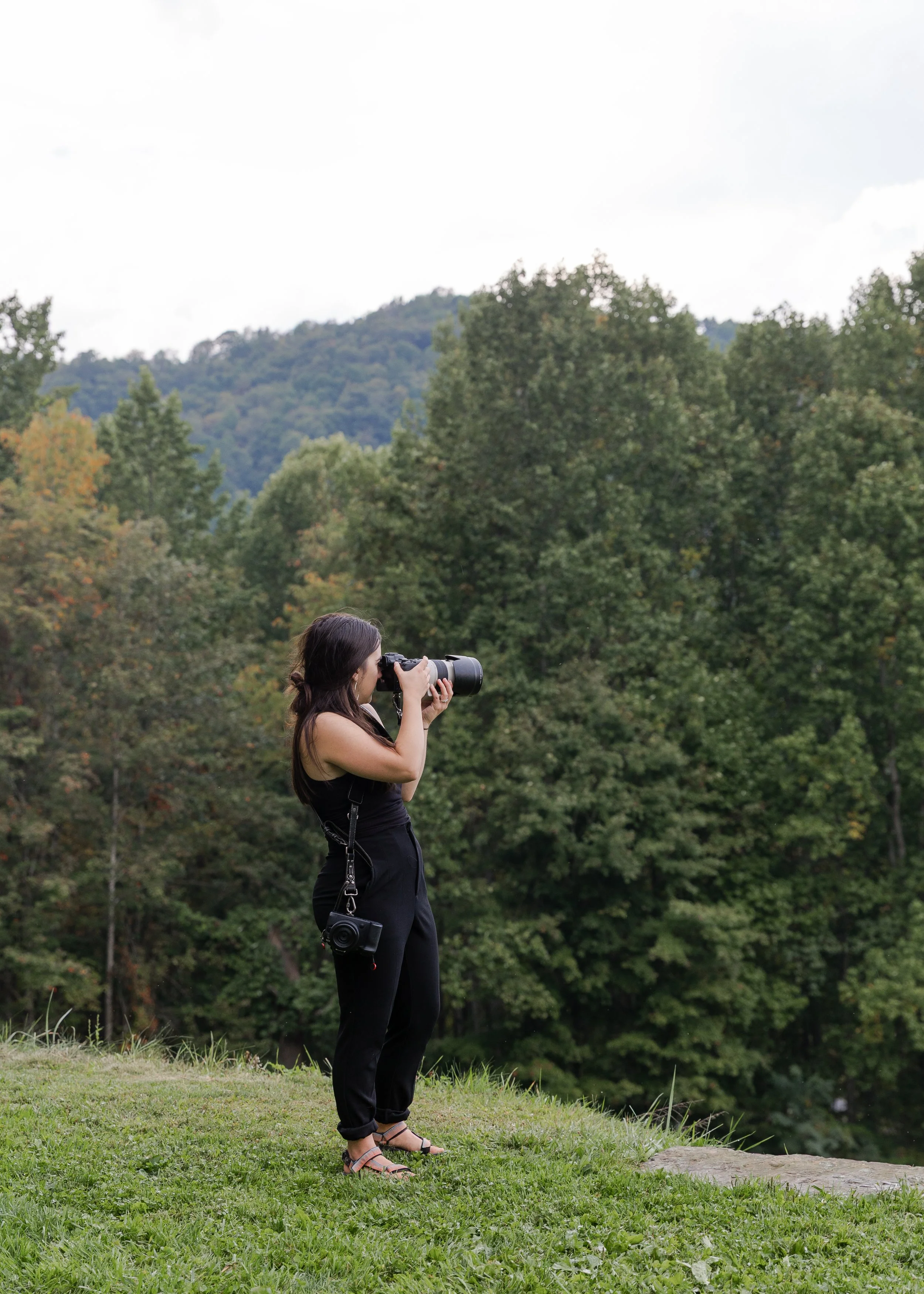
An Elopement Planner (Becca)
Manages vendors, permits, and logistics
Designs your timeline and experience
Handles setup, coordination, and behind-the-scenes details
AND an Elopement Photographer (Hannah)
Captures your day beautifully
Guides location and lighting decisions
Ensures every moment is documented intentionally
This means:
You’re fully supported
Nothing falls through the cracks
And you don’t have to split your attention between planning and being present
If you’re looking for an experience that feels seamless from start to finish, this approach can make all the difference.
Conclusion
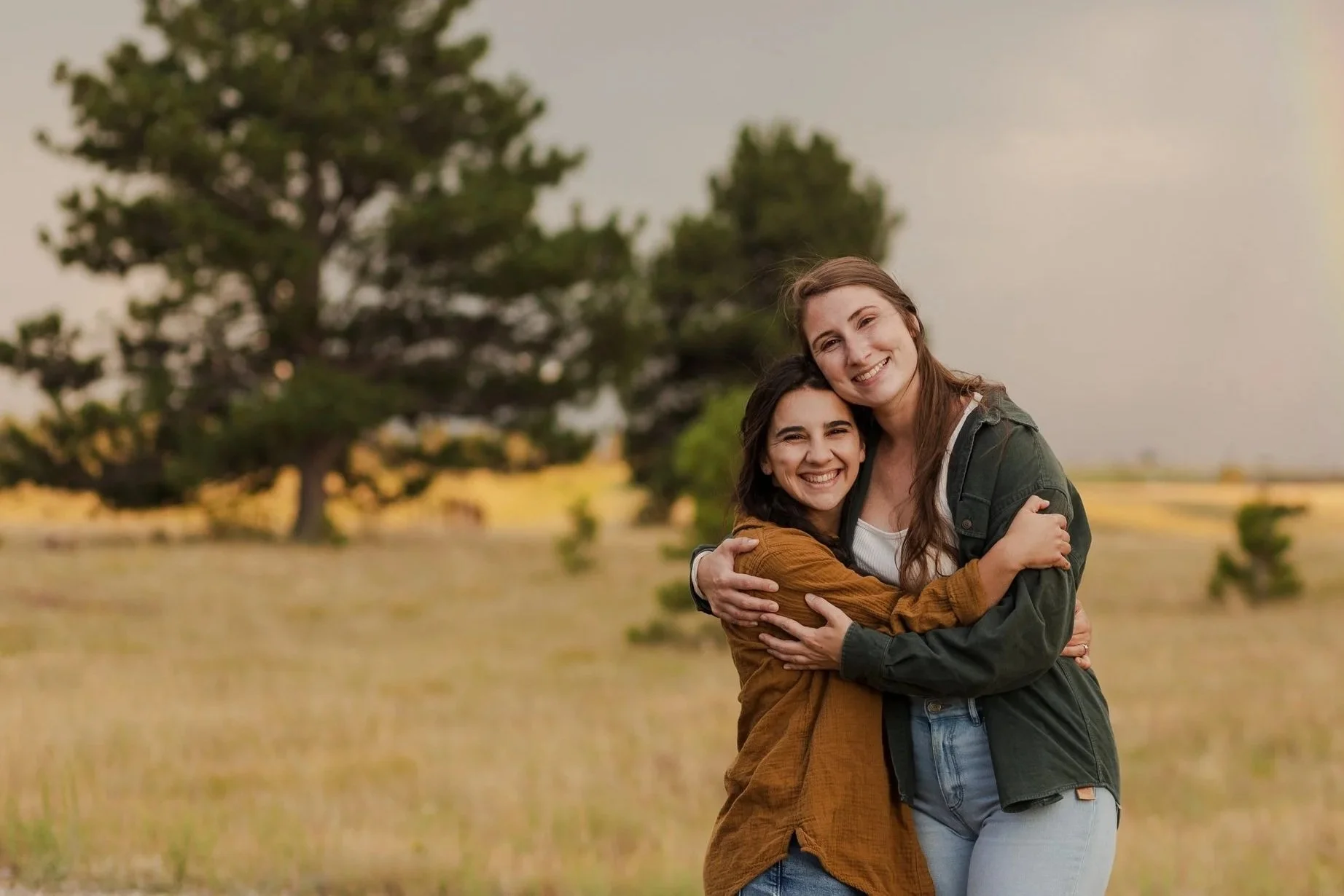
Your elopement isn’t just about photos—or logistics, it’s about how the day feels. Whether you choose a photographer, a planner, or a team that combines both, the goal is the same:To create a day that feels intentional, stress-free, and completely your own.
The right support doesn’t just make your elopement easier, it allows you to actually experience it.